Why see Peking Opera at the Liyuan
Why see Peking Opera at the Liyuan
A 200-year-old national art form
Peking Opera developed in Beijing in the late 18th century, blending regional Chinese opera styles into a single art combining song, spoken dialogue, mime, acrobatics and combat — recognised by UNESCO as part of the Intangible Cultural Heritage of Humanity.
Four role types, instantly readable
Performers train for years in one of four core role types — sheng (male leads), dan (female roles), jing (painted-face roles) and chou (comic roles) — each with distinct voice, gesture and often makeup, so the story is legible even before you know the plot.
A theatre built for exactly this
Established in the 1970s and reopened after renovation, the Liyuan is one of Beijing's best-known dedicated Peking Opera venues, purpose-built to introduce visitors to the art form with English subtitles alongside the stage.
How a Peking Opera evening unfolds
How a Peking Opera evening unfolds
A Liyuan evening typically bundles several short pieces into one programme rather than a single long opera. Here's the general shape of the night.
Arrival
Into the Liyuan
Some seating options include a pre-show tea service or dinner; English subtitle screens flank the stage for the performance itself.
Opening piece
Song and gesture
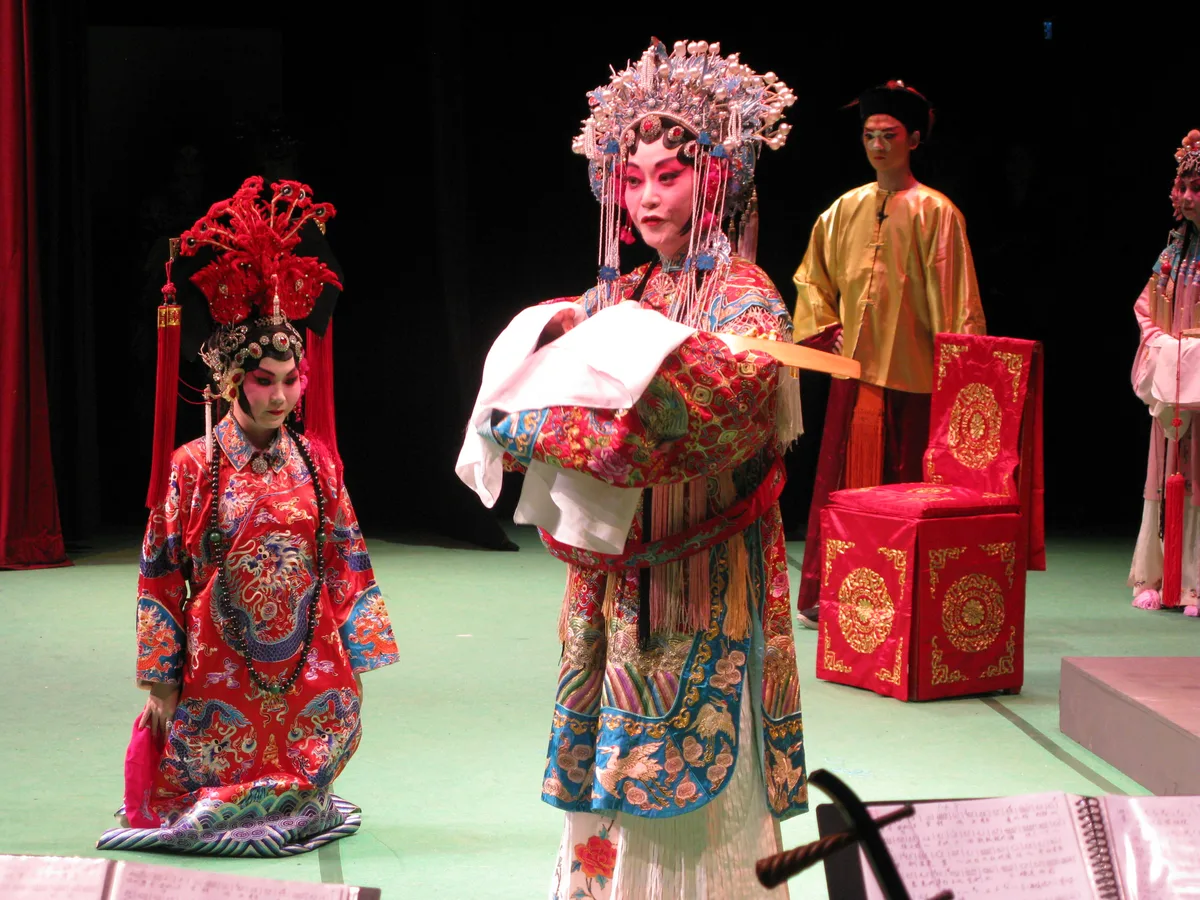
Programmes often open with a piece centred on the dan (female) or sheng (male lead) roles, showcasing Peking Opera's distinctive vocal style and formalised gesture.
Painted faces
The jing role appears
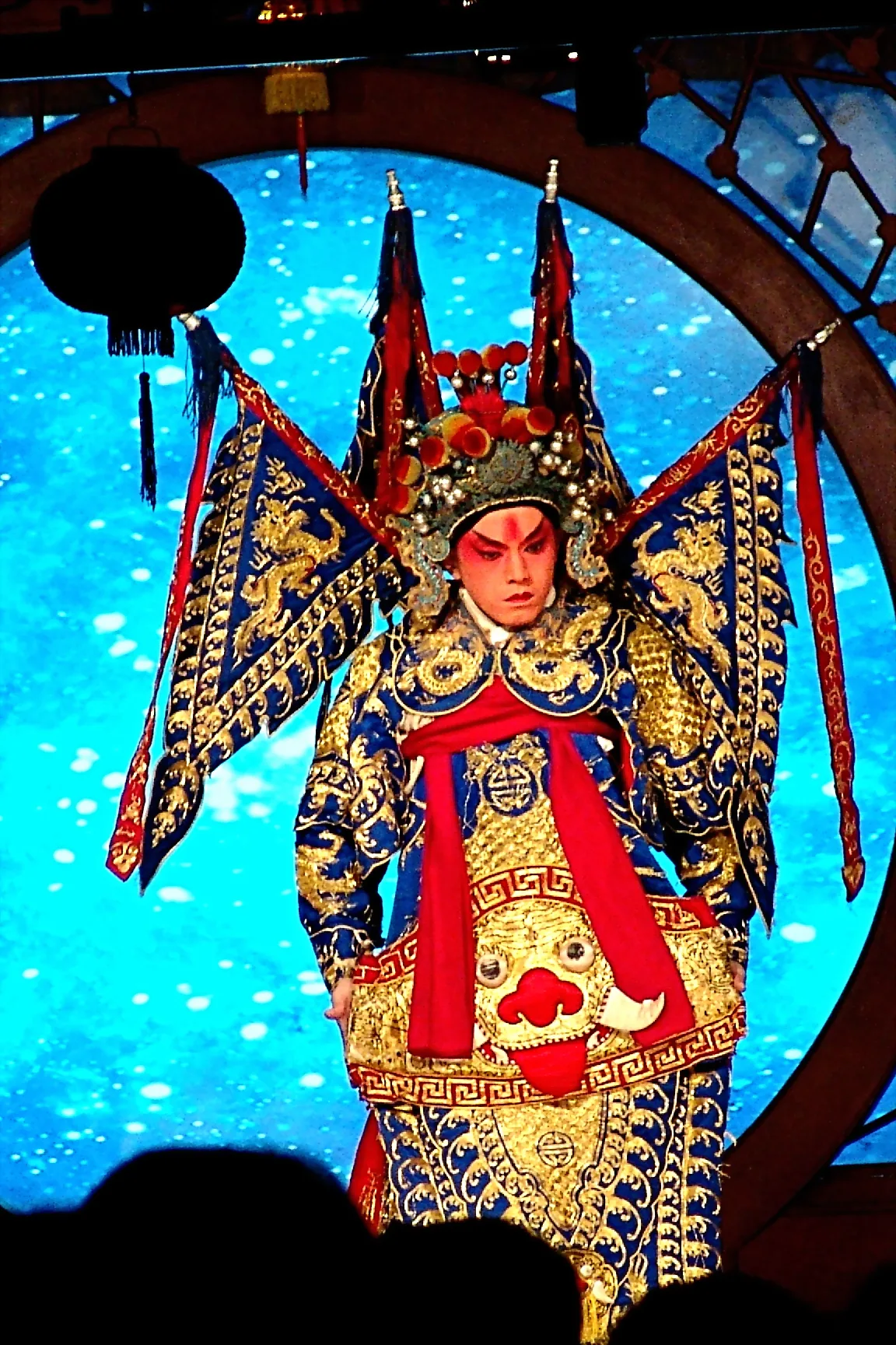
A jing (painted-face) role brings bold lianpu face-painting to the stage — colour and pattern signalling the character's nature at a glance.
Acrobatics & combat
Stylised martial sequences
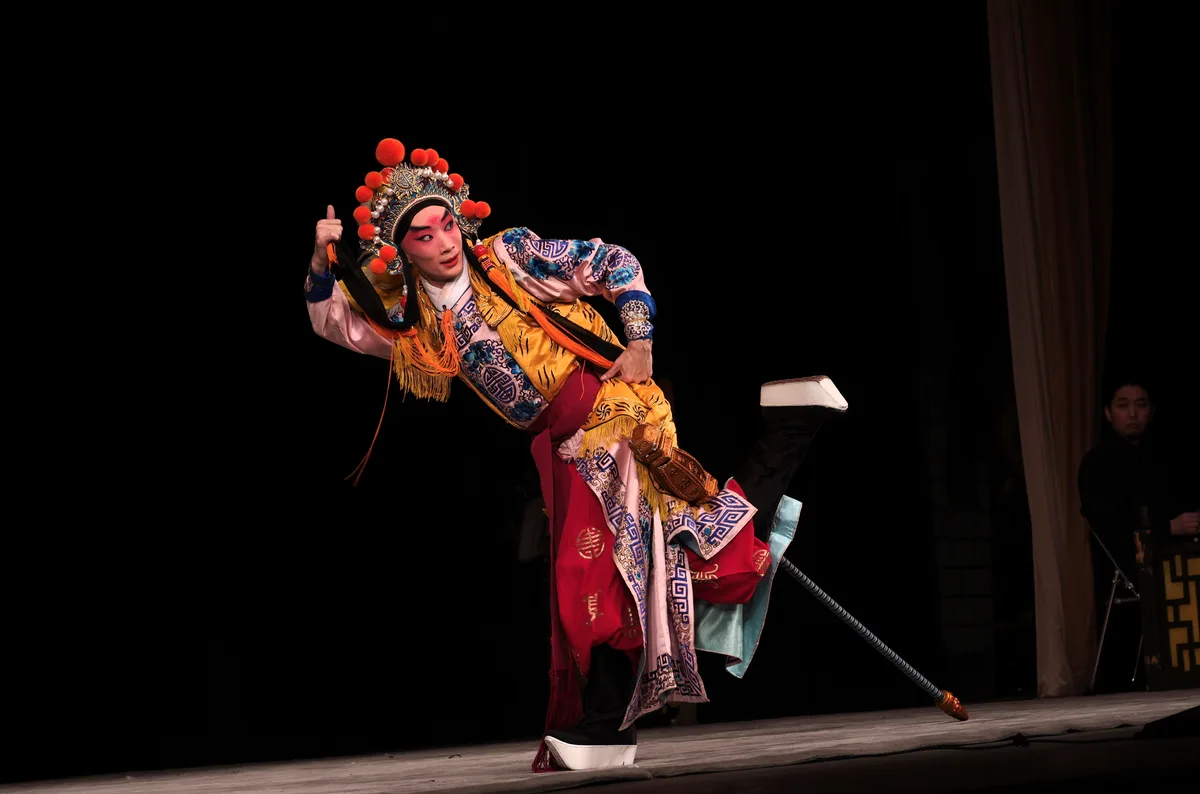
Peking Opera is famous for its acrobatic combat sequences — tumbling, weapon work and precise choreographed fighting drawn from Chinese martial arts traditions.
Comic relief
The chou role
A chou (comic) role often lightens the programme's tone between more dramatic pieces, recognisable by a distinctive small patch of white face makeup.
Finale
The closing piece
The evening closes with its most visually elaborate piece, often combining several role types and the full musical ensemble.
Inside the Liyuan Theatre
Inside the Liyuan Theatre
The Liyuan sits in the Qianmen area of central Beijing — here's what to know before you go.
A dedicated Peking Opera stage
The Liyuan Theatre, inside the Qianmen Jianguo Hotel complex, has hosted Peking Opera for visitors since the 1970s, with a hiatus and reopening in recent years bringing updated staging alongside the classic repertoire.
Central Qianmen location
The theatre sits in the historic Qianmen area, an easy distance from Tiananmen Square and the Qianmen pedestrian street, convenient to combine with daytime sightseeing.
Seating and dinner options
Standard seating gets you the performance with English subtitles; some tickets add a pre-show Beijing-style dinner or tea service for a fuller evening.
On the night
Smart casual dress is fine; performances typically run around an hour to ninety minutes, and photography is generally permitted (without flash) during the show.
Peking Opera, in pictures
Peking Opera, in pictures
The painted faces, the acrobatics and the elaborate costume of Peking Opera.
Ticket options & what's included
Ticket options & what's included
| Option | What it includes | Good to know |
|---|---|---|
| Standard seating | Entry to the performance, English subtitles | The classic way to see the show |
| Premium seating | Better-located seats closer to the stage | Best view of costume and makeup detail |
| With dinner or tea service | Above, plus a Beijing-style meal or tea before the show | Good for a fuller evening out |
Ways to see Peking Opera in Beijing
Find a Liyuan performance for your dates
Every option below is bookable through GetYourGuide, with live availability and the final price shown in your own currency before you pay.
Planning your visit
Planning your visit
Check the current programme
The Liyuan's bill of short pieces changes regularly — check the live listing for what's on during your Beijing dates before booking.
Pick your seating by priority
Premium seats closer to the stage reward the visual detail of costume and painted-face makeup; standard seating is a perfectly good, more affordable way to see the whole programme.
Combine with Qianmen sightseeing
The Liyuan's central location near Tiananmen Square and the Qianmen pedestrian street makes it easy to combine with a day of nearby sightseeing.
Follow along with subtitles
English subtitle screens flank the stage, so you can follow the plot even without prior knowledge of the piece being performed.
Booking flexibility
Listings offer free cancellation up to 24 hours before, so you can lock in an evening at the Liyuan without losing flexibility in your Beijing itinerary.
Planning a Peking Opera night in Beijing
Planning a Peking Opera night in Beijing
GEO/FAQ
Liyuan Theatre Peking Opera questions
What is Peking Opera?
Peking Opera is a Chinese theatrical art that developed in Beijing in the late 1700s, combining song, spoken dialogue, mime, acrobatics and stylised combat. It's recognised by UNESCO as part of the Intangible Cultural Heritage of Humanity and remains one of China's best-known performing art forms.
What do the painted faces mean?
Painted-face (jing) roles use bold colour and pattern to signal a character's nature at a glance — red often for loyalty or courage, white for cunning, black for integrity, among other conventions built up over the art form's history.
Will I understand the story?
Yes — English subtitle screens are typically displayed alongside the stage at the Liyuan, and programmes usually bundle several shorter, self-contained pieces rather than one long continuous opera, making it accessible for a first visit.
What are the four role types?
Sheng (male leads), dan (female roles), jing (painted-face roles, usually powerful or supernatural characters) and chou (comic roles, marked by a small patch of white face makeup) are Peking Opera's four core role types, each with its own voice and gesture style.
How long does a performance run?
A typical Liyuan evening runs around an hour to ninety minutes, usually bundling several shorter pieces that showcase different role types and skills, including the acrobatic combat sequences Peking Opera is known for.
Can I combine it with dinner?
Yes — some ticket options add a pre-show Beijing-style dinner or tea service. Each option's inclusions and live price are shown in the booking widget, with free cancellation up to 24 hours before.
Still deciding which night to go?
Leave your email and roughly when you're in Beijing — we'll send a short rundown of how a Peking Opera evening works and how to book.